Posts

Showing posts with the label empowering learners

Setting our Maori learners up for success in writing.

Image
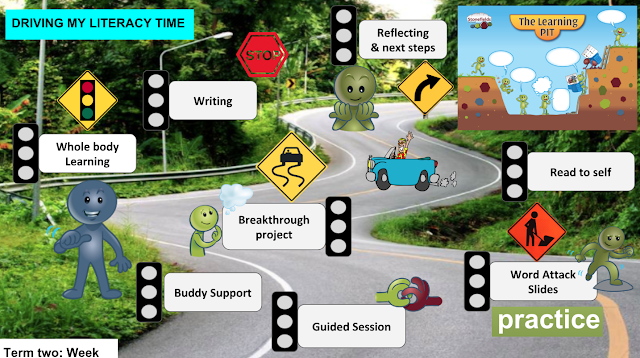
Supporting our Maori learners with whole body learning and knowing what to do when they are stuck. This scaffold has particularly been for a specific Maori leaner to support with when he is stuck in writing. This has been helpful and supporting him to take ownership of his writing. 

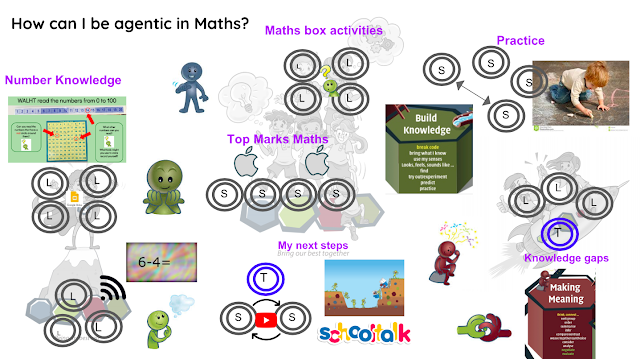
How can we empower our learners to be agentic?

Image
Through our coaching sessions we are looking at the design of our teaching and asking ourselves...  What is ultimately best for our learners?  What is going to hit their needs?  This week, using School Talk I have deliberately actioned my time in the timetable to ensure target learners are given the extra dose and density and learners who need to be stretched are being stretched.   My wonderings are about space and how what deliberate acts of teaching am I doing to support learners with where they should learn and why they are learning what they are learning?  Thinking along the lines of .... How can I empower learners, with a particular focus on Māori learners to make informed decisions through their language capabilit y about why and where they are learning?

How are learners making informed decisions?

Image
Trying to formulate my Inquiry, Some thinking and questions about how learners are agentic in their learning. How are they making informed decisions? Are we and learners using space deliberately to target the needs of our learners? I have started to use this with my learners to take action of what they are learning, why and where is the best place to learn. 

Poets Corner hooking learners into reading through Fluency

Image
Thinking about what next... Making poetry come alive with my literacy group. Learners listening to their reading through Speakpike. By learners reading poems to increase their fluency and confidence. Learners were asked what their poem interests were, a majority said the liked humorous poems, so that is what we found through  Poems 4 Kids . Above is the school talk view outlining the progressions for this reading exercise and how we are going achieve these reading goals. Maori Student Voice: 'I like reading poems because I am good at reading them'.

A closer view of my expo display

Image

Empowering Learners to drive their level of understanding in their reading

Image
Taking agency Making Meaning of how the three level guide fits into the Learning Process Having a go at the three level guide questions to infer into the book. Excited to give this a try with my learners. Engage them in collaboration, oral language and empowering them to make meaning of the text.

Reading lead through passion!

Image
With our new design in teaching, we are grouping our learners by their passions. I have a group of learners who are interested in gardening and are using our surrounding environment. Our groups are mixed ability to increase the oracy in reading and in ability groups when required for a guided work attack session.  These learners took their passion for their garden to another level where they wrote a proposal for a shade sail. They presented this to our Principal Sarah Martin. The learners were involved in real authentic learning, all based around literacy. Check out some of their slides

Language in Abundance

Image
When I think about the barriers in roadblocks in reading are: Phonological knowledge is not all about the strategies of how to decode it's about the involvement in reading and the quality of oral language during reading. How can we create high cognitive  and behaviourally engagement in reading? Exchanging in  Elaborative response / elaborative gifting not about asking what you already know, not just asking questions. How am I going to do this?... A video of what the three-level guide works. Why do we Think, Pair, Share - metagonition. talking together - chain linking, modeling chain linking sentence,  Conversation not someone talking to you, it's about connectedness and you learn alot. Using the three level guide to moving from learner to teacher to 'us' Mixedabilityy vs abiltity grouping.  Level One Literal (reading ‘on’ the lines – factual statements from the text). Level Two Interpretation (re...

Sharing with Te Roopu Pourewa CoL how to empower learners through School talk

Image
Exciting to be able to share the aspects of my Inquiry of how I am making shift in Inquiry.

What create looks like in the digital age.

Image
This is my interpretation of how I view 'create' in this digital age. With a focus on how learners are retelling stories and sharing their understanding. Continue to see how learners can create their understanding and express their ideas. 

Reaching out to our community to share who we are in Te Rēo.

Image
Engaging our learners including our boys and Māori learners to read their Pepehā to their whanāu.  This has been a meaningful experience to learn about each other and  grow in confidence in our reading. 

2018 Reading Aloud: Children 's Attitudes toward being Read to at Home and at School

Image
This article was such a great read, thank you Jannie van Hees.  Have attached some quotes Reading aloud is associated with a range of literacy skills and cognitive benefits. Reading to children in the early years has been linked to related language growth, emergent literacy and reading achievement (Bus et al., 1995). A recent analysis of 29 studies found “significant, positive effects for read-aloud interventions on children’s language, phonological awareness, print concepts, comprehension, and vocabulary outcomes” suggesting that read-aloud interventions “provide children at-risk of reading difficulties with higher literacy outcomes than children who do not participate in these interventions” (Swanson et al. 2012, p. 13). So as a team we may want to introduce D.E.A.R (drop everything and read), with a song or certain sound. Introduce this a daily item. All building learners capacity to and desire to read, increase the enjoyment and motivation. Create a love for readin...

Dr Jannie van Hees Shared another lens on how we empower our learners

Image

Inquiring into Dyslexic Behaviours

Image
Working alongside SENCO we are looking how to support our young learners who are displaying dyslexic tendencies.  This diagram helps us think about the whole child and how they learn.

Drive Through Blending

Image
I love it, goes hand in hand with driving our own learning in Reading.  This will help to hook in the boys especially.

Word Attack in Action

Image
Making word attack a part of the everyday reading programme has been a hit. Learners were driving their own learning to work towards their progressions. This allowed me to have more directed time to focus on reading strategies during guided reading sessions.

Empowering Learners

Image

Word Attack & Word Knowledge - how it can be a part of what I do when reading.

Image
Having a daily focus on word attack and word knowledge progressions.  This will help to embed reading techniques and strategies to help unlock getting to the next reading level.  These practices are to be embedded and a 'part of me'.

Empowering my Learners Through Reading Choices

Image
Using Explain Everything as an avenue to provide learners with choice in their learning during Reading Time. Looking forward to starting with it on Monday. Already reflecting on how is this catering for my Maori Learners and ESOL. Monday I will collect some student voice on their initial thoughts, and what changes would they consider.

MASAM - What can I do for my Māori Learners to raise achievement.

Image
Listening to Janelle Riki-Waaka  " Seeing your school through the eyes of Māori parents" The Key messages Putting on the lens of a Maori parent about what is success for their child ? what would I see, hear, and feel in the school/classroom that shows that a child’s culture, language, history and tikanga will be valued and celebrated? My thoughts: How am I going to give my Maori learners more choices to manage their learning? The first step is to do this through a digital lens (Explain Everything) The second step is setting goals with my learners through knowing which 'learner qualities' are to support their learning, looking at data together, having a visual to work with. Through visual and interactive displays The third step is to reflect on how learners are being engaged, involve whanaū as part of the review process, collect student and parent voice.